July 2026 / erased but not forgotten: carrying the weight of the invisible
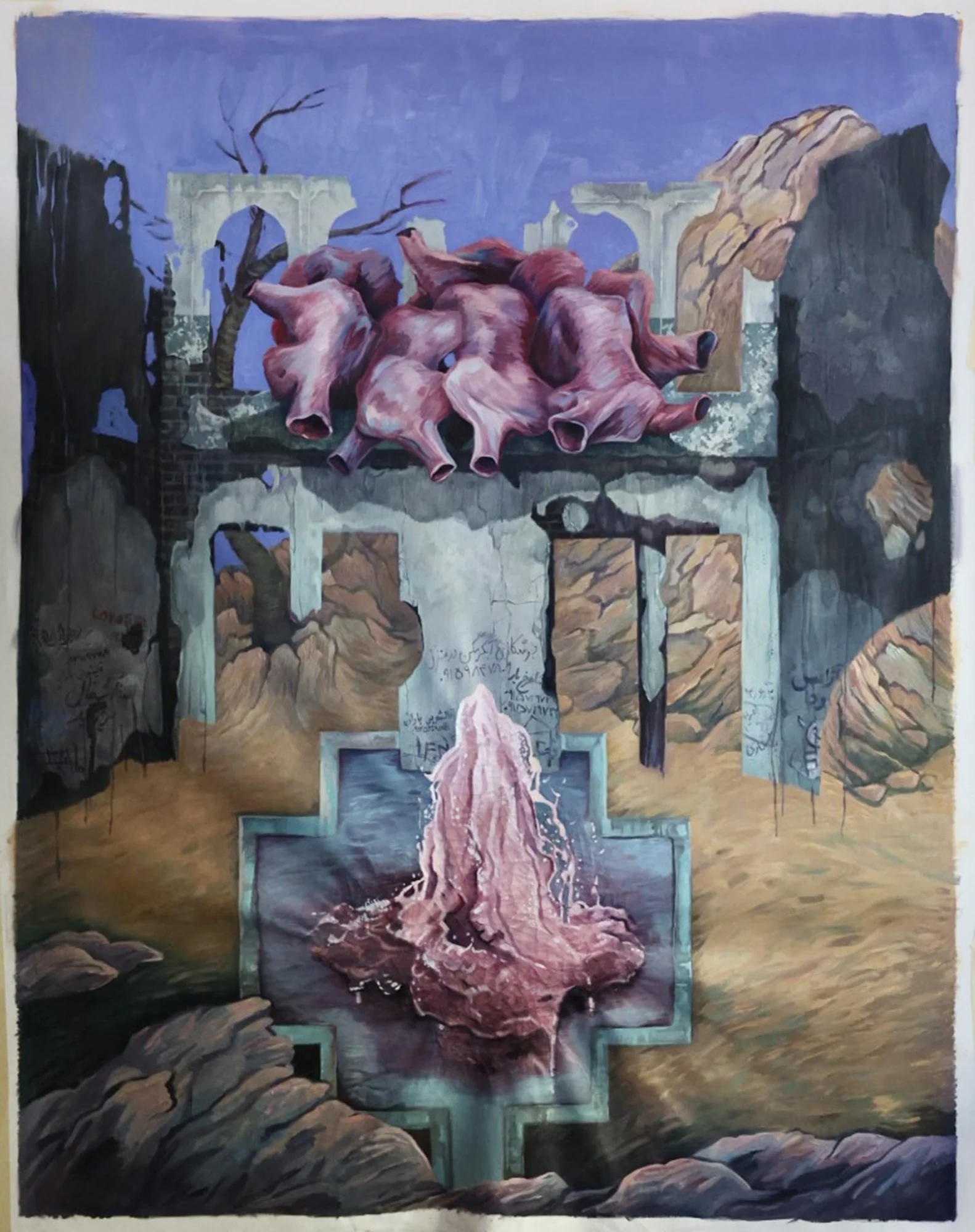
Foroozan Shirghani, Alienation-1, Oil and acrylic on canvas, 230” x 180,” 2026
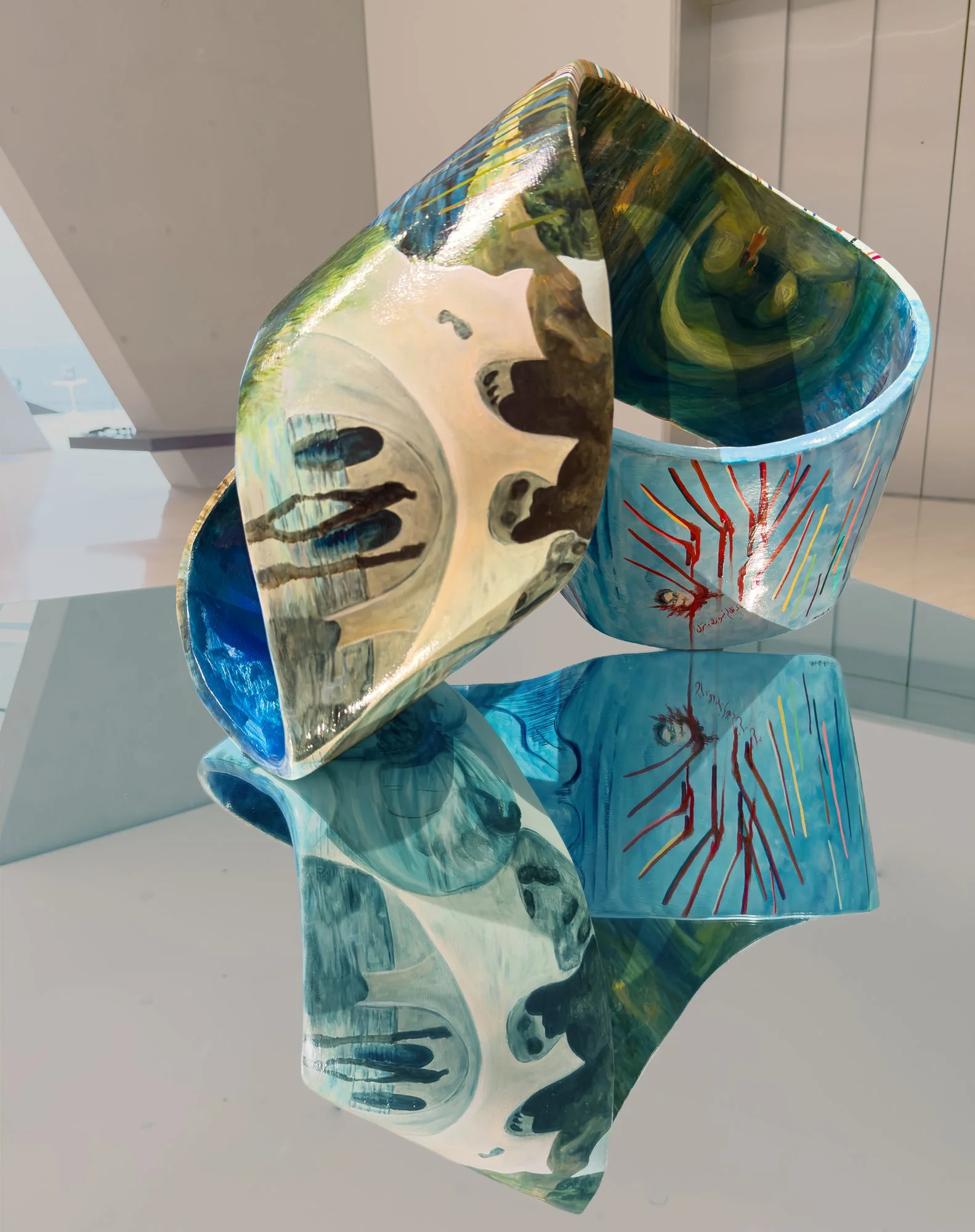
Niloufar Fallahfar, Infinite Action II, Paint on wood, and mirror, 19”x 25” x 20,” 2026
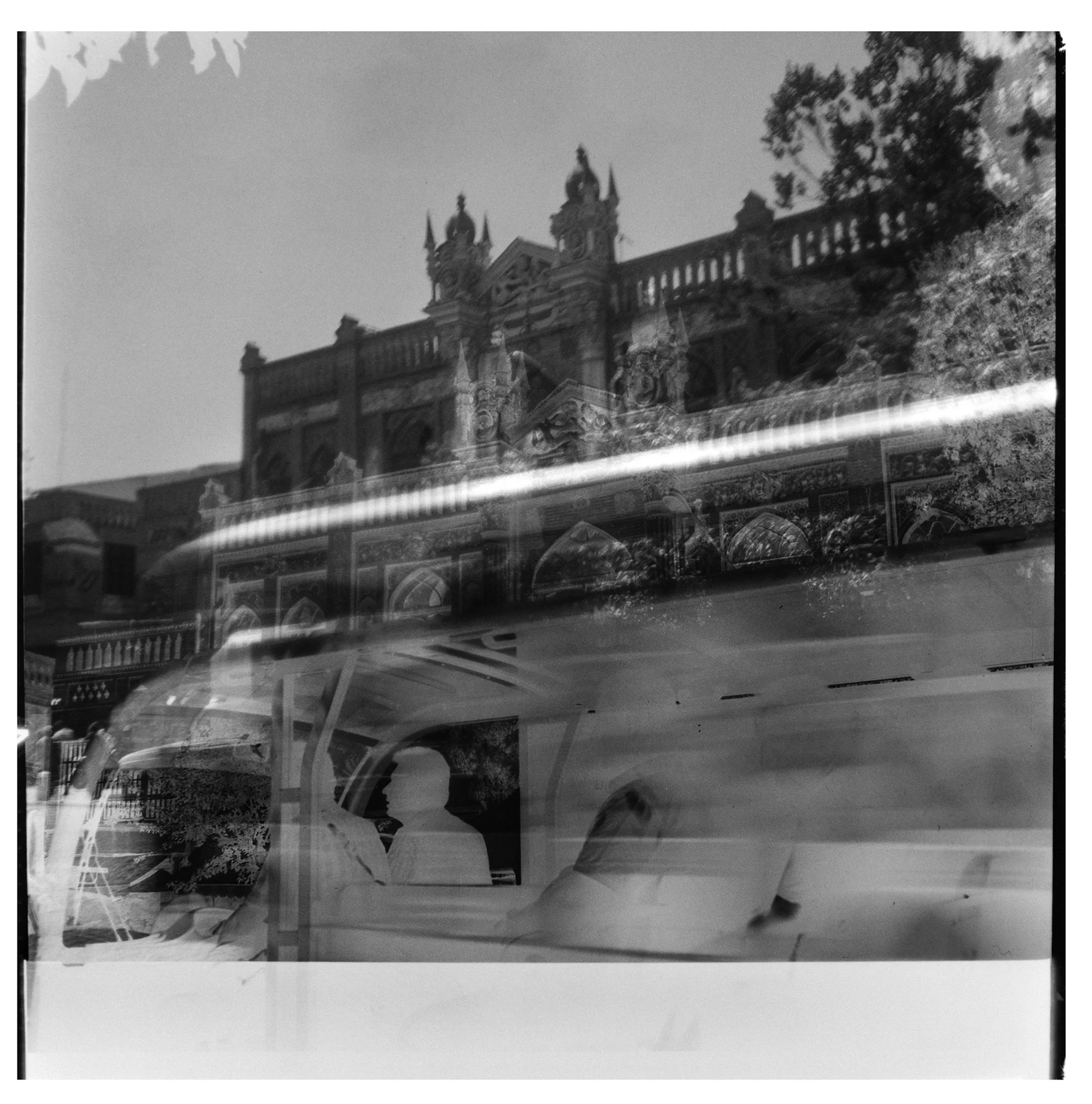
Sina Boroumandi, Untitled, Print on archival paper, 49" x 69," 2026
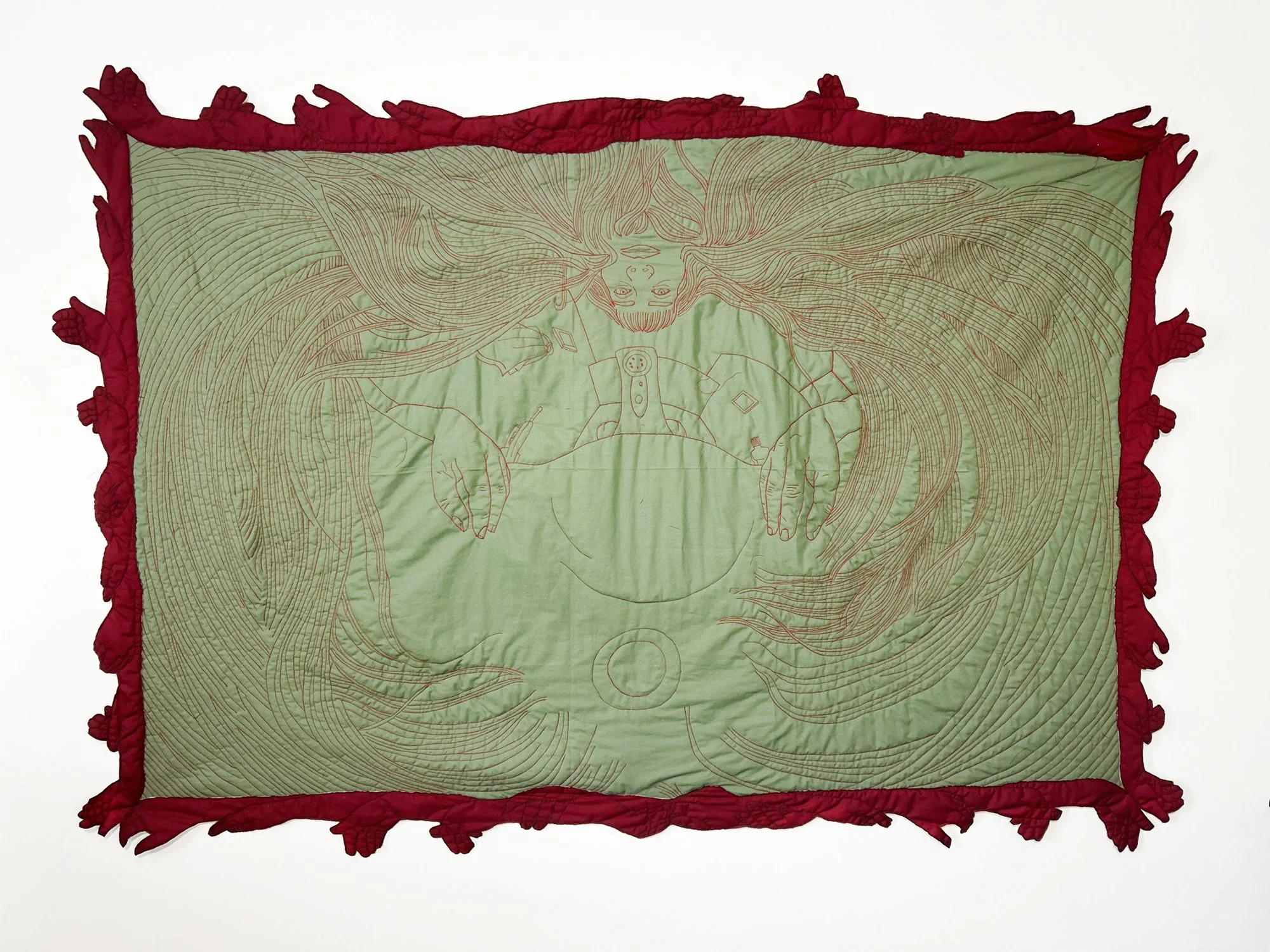
Ainaz Alipour, I turn around and Look, Textile, 49" x 72," 2026
erased but not forgotten
carrying the weight of the invisible
Curated by Mahsa Soroudi & Parisa Ghaderi
Exhibiting Artists
Ainaz Alipour
Sina Boroumandi
Niloufar Fallahfar
Rojin Shafiei
Forouzan Shirghani
July 2 - August 1, 2026
Opening Reception, Thursday, July 2, 5-8pm
Gallery Hours:
Friday–Sunday, 12–5pm
erased but not forgotten: carrying the weight of the invisible brings together five Iranian artists, both in Iran and across the diaspora, exploring the fragile space between remembering and forgetting. While some works reflect the impulse to suppress pain to survive, others return to memory as an act of preservation, confrontation, or healing. Rather than focusing on events themselves, the exhibition considers their emotional aftermath and asks a central question: Is forgetting more painful than remembering, and which pain do we ultimately choose to carry?
Artist Statements //
Rojin Shafiei
This experimental documentary reflects on exile, memory, and the instability of return. Through shifting perspectives, layered imagery, phytograms, and Persian handwriting, the film moves between inscription, erosion, and transformation, tracing the fragile relationship between memory and place.
Alternating between landscapes, archival fragments, and present-day images of the artist’s family home in Isfahan, the work approaches the house not as a fixed site of belonging, but as something reconstructed through distance, loss, and time. Repeated returns to the same space reveal how memory is continuously reshaped by absence, distance, and emotional displacement.
Its final shift back to the artist’s point of view underscores the separation between lived experience and what can now only be accessed through memory and images.
Niloufar Fallahfar
Memory is unstable. What remains visible is often only a fragment of what has been lived, while the rest dissolves, is suppressed, or transforms into another form of remembering. In these works, painting expands into sculptural structures inspired by Persian architecture and miniature painting, approaching space, time, and memory through movement and reflection.
The works Infinite Action II and At the Threshold explore the fragile boundary between remembering and forgetting. Möbius forms and architectural arches function as spaces of passage, repetition, and return, where fragments of Iranian cultural memory re-emerge through shifting perspectives. References to the Shahnameh, where heroes rise against tyranny and reclaim the land, alongside a verse by Hafez — «ﻣﻧزل ﺑﮫ راه ﻧﺑرد ظﺎﻟم ﮐﮫ ﺑﺎش ﺧوش» (“Be joyful, for the tyrant will never find the path home”) evoke cultural memory as something continuously carried, reconstructed, and returned to across time.
Foroozan Shirghani
Suffering leaves traces, whether consciously remembered, repressed, or consigned to forgetting. In these works, the body becomes a battlefield between remembering and forgetting, a living archive shaped by trauma, resilience, and the ongoing effort to survive emotional pain.
Through fragmentation, deformation, and at times the destruction of the figure, the works engage with destabilizing experiences such as war, migration, exile, and displacement. The body functions as a site where memory and trauma are physically inscribed, revealing the psychological weight carried beneath the surface.
These formal distortions reflect not only personal suffering, but also the pressures of dysfunctional social and political systems that lead to erosion, corporeal disintegration, and estrangement from environments that themselves gradually decay and collapse.
Ainaz Alipour
This series begins from the tension between remembering and forgetting, not as opposites, but as fragile conditions that fail to fully contain lived experience. Using her own body as both subject and surrogate, the artist re-enacts gestures drawn from everyday life, movements that echo her mother, sister, and versions of the self shaped by memory and absence.
First captured through photography and later translated into stitched line drawings on fabric, these gestures become slow, physical acts of reconstruction. In the absence of others, the artist becomes witness, participant, and stand-in, rebuilding memory through repetition rather than preservation.
Suspended hands and arms extend this condition into space, appearing fragmented and disembodied, like traces of presence that persist after disappearance. Together, the works inhabit a space between intimacy and distance, memory and erosion, asking what remains when memory must be continually performed to survive.
Sina Boroumandi
The first encounter with a scene forms an initial visual impression. How later impressions relate to this first experience shapes memory, what is preserved, altered, or allowed to fade.
Using the camera as a mechanical device for recording vision, this work examines the unstable relationship between perception and memory through a two-stage process. An image is first recorded and developed, then reconstructed by superimposing the negative and positive of the same scene.
Each photograph in this series results from the accidental overlap of two views of the same place, as encountered by a passerby in the city. Created during a period marked by war and mass violence, the works reflect the growing rupture between perception, memory, and lived reality.
Curatorial note: This series was photographed in Tehran between June 2025 and February 2026, during repeated attacks, mass civilian killings, and prolonged communication blackouts. Over the course of making the work, the city itself underwent a profound physical and psychological transformation
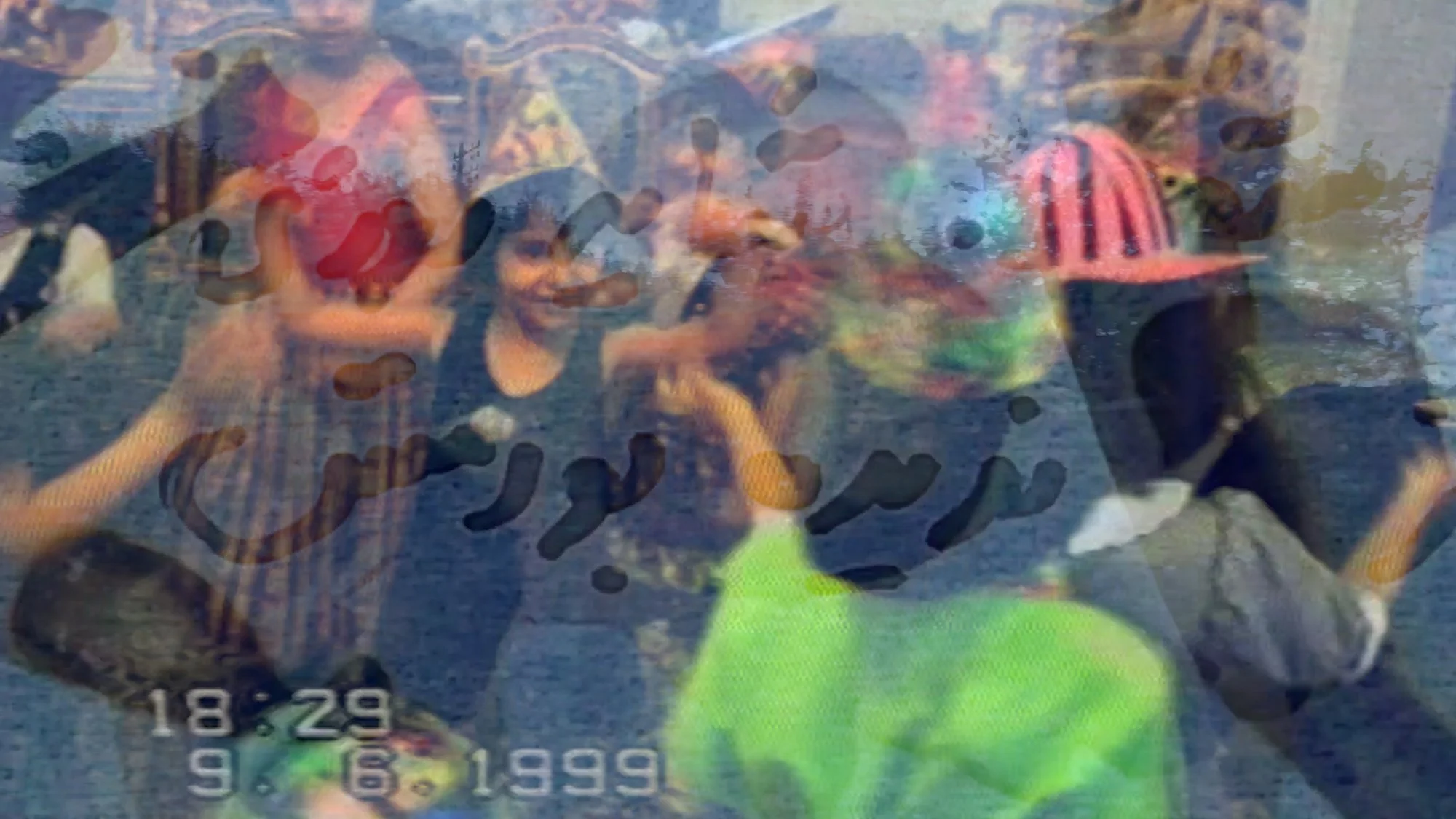
Rojin Shafiei, From the Memory of Fig Trees, Video-Installation, 17” x 17,” 2026